Palm Springs sun is kind to palm trees and unforgiving to window screens. After a season of breeze, dust, and the occasional rodent curiosity, screens sag, rip, and collect burrs that no homeowner wants to touch. At Plus Ultra Window Cleaning, screen repair is not an afterthought tacked onto a wash; it is a core service shaped by years of local experience, practical trade-offs, and a straightforward commitment to get the view back without fuss. This is how we approach screen repairs in Palm Springs CA, why our method matters for desert homes, and what you should expect when you call us.
Why screen repair matters here Windows in Palm Springs work harder than windows in many places. Sand-laden winds scour frames and wear the mesh, UV intensity weakens vinyl spline and certain fiberglass meshes, and insects that flourish in warm climates exploit every small tear. A damaged screen is more than cosmetic. It affects ventilation, allows dust to enter living spaces, compromises insect protection, and shortens the lifetime of window hardware because grit accumulates in the frame tracks. For properties that run evaporative coolers or rely on cross-ventilation, a proper screen repair directly affects comfort and energy use.
A practical approach, not a one-size-fits-all fix Many providers treat screen repair as a single operation: pull out the old screen, snap in a new roll of mesh, and depart. That works fine for small, standard frames. For the varied architecture of Palm Springs, from mid-century modern homes with wide expanses to custom frameless balconies and accordion screens, a nuanced decision is necessary. At Plus Ultra Window Cleaning we evaluate three things before starting any repair: the frame condition, the type of mesh that suits the opening, and the homeowner’s priorities for longevity versus cost.
Frame condition. If the frame is warped, corroded, or the track hardware is damaged, simply replacing mesh is a temporary fix. We inspect corners, spline channels, and any corrosion in aluminum or wood frames. If restoration is necessary, we present options: minor corner clamps, track cleaning and lubrication, or full frame replacement. Often a modest frame repair doubles the useful life of a new screen.
Mesh type. Not all meshes are equal. Standard fiberglass is flexible and affordable, Informative post but it degrades faster under strong UV and loose sand. Aluminum mesh resists abrasion and holds its shape, but it is heavier and can dent. Pet-resistant meshes are woven more densely and come with a stiffer feel, making them ideal for families with cats or dogs that push or climb. Solar and privacy meshes reduce heat and visibility, respectively, and are worth considering for west-facing rooms that bake in the afternoon. We recommend mesh selection based on exposure, usage, and budget, and always explain the trade-offs.
Homeowner priorities. Some clients want a quick, low-cost repair for a rarely used window. Others prefer a longer-term investment in pet mesh or solar mesh for patios and sunrooms. We lay out the costs and expected lifespans. For example, a standard fiberglass replacement might last three to five years in a high-UV location, while a higher-grade polyester or pet mesh can extend that to eight years or more when combined with occasional track maintenance.
On-site assessment: what we look for and why it matters When we arrive, the first five to ten minutes are diagnostic. We listen to homeowners—where they use the window, whether pets push against the screens, and whether there are drafts. Then we perform a hands-on check. Key things we examine include mesh tension, spline condition, corner welds or clips, whether the screen frame sits squarely in the opening, and how smoothly the frame operates in the track.
Mesh tension matters because a loosely seated screen flaps in wind and rubs on the frame, accelerating wear. Spline condition matters because brittle spline is the single biggest cause of premature failure—when it cracks, the mesh loosens and the whole panel shifts. Corner welds or clips are particularly important for larger frames; a failed corner means the frame will twist under load. Smooth operation in the track matters for sliding screens: if the rollers or guides are clogged with sand, the owner will repeatedly jam the screen and create tears.
A repair example from a mid-century home A recent call from a 1960s Palm Springs home illustrates our approach. The living room had a three-panel sliding screen with one panel ripped along the lower edge and the middle panel tracking poorly. The homeowner initially wanted only the rip fixed. We found two issues: the ripped mesh was standard fiberglass already near end-of-life, and the middle panel’s track had compacted sand that wore the bottom edge of the screen every time it was opened.
We proposed a two-step fix. First, clean and re-lubricate the track and replace the worn bottom guide. Second, replace both affected panels with a heavier, UV-stabilized mesh and a sturdier spline. That solution raised the immediate cost by about 25 percent over a single-panel quick fix, but it extended functional life by several years and eliminated a recurring repair call. The homeowner chose the longer-term fix. The result was a smoother sliding operation and a mesh that showed no sagging after a season of high winds.
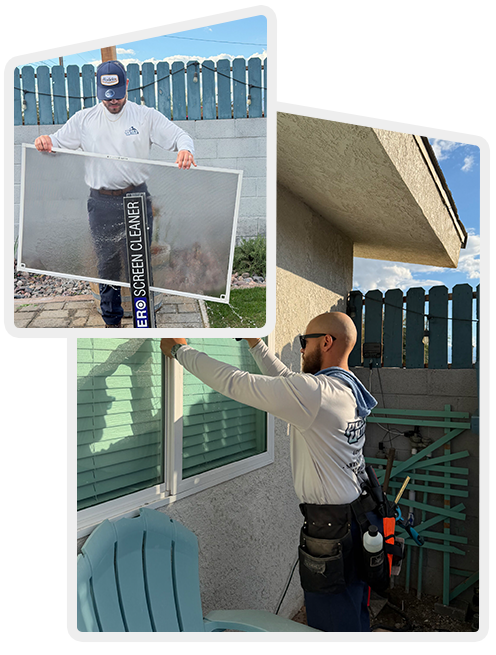
The repair process, step by step We aim for transparency about what gets done and why. When a homeowner agrees to a repair, here is a typical flow of work we perform. For convenience this is shown as a short checklist:
- inspect frame and track, document issues with photos remove the old mesh and evaluate spline and frame for reuse decide with homeowner on mesh type and whether frame repair is needed install new mesh with appropriate spline, cut and finish corners, and test fit reassemble, lubricate moving parts, and demonstrate operation
Each step includes quality checks. For example, after installing mesh we check tension visually and manually, pulling test corners to verify spline bite. For sliding panels we re-seat rollers and confirm smooth travel over a dozen cycles. If the frame needed repair, we take before and after photos to show the difference.
Materials and tools we use Our carts include multiple mesh options and a range of spline sizes because spline diameter influences how well the mesh stays in place. We carry spool cutters and spline rollers sized for residential frames. For larger or custom frames we have corner clamps and replacement corner assemblies. For frames with oxidation we use non-abrasive cleaners and corrosion inhibitors to avoid future binding in tracks. For pet mesh installations we bring heavier spline and recommend slightly tighter tension.
Material choice is not purely aesthetic. Fiberglass mesh is cost-effective but can tear more easily in high-traffic windows. Aluminum is durable but can crease during installation if not handled carefully. Polyester and reinforced weaves handle pets and repeated slamming better. UV-stabilized meshes include additives that slow sun damage. We will always tell you the expected lifespan ranges. For example, in direct sun a standard fiberglass mesh might last three to four years, while a UV-stabilized polyester mesh can last six to ten years depending on exposure and maintenance.
Pricing and value: why you should consider more than the lowest quote Price is a frequent deciding factor. Some companies undercut by doing surface-only fixes or using the thinnest spline that seems to hold in the moment. Savings evaporate if the screen sags or pops out after a single season. We price services to cover durable materials and thorough prep: frame cleaning, spline replacement, and post-installation testing. For many customers, an incremental spend of 20 to 40 percent upfront buys two to three times the useful life of the repair.
We also factor labor into price honestly. Some screens are easy: single-pane, standard frames that come out and go back in within 20 minutes. Others are complex: custom shapes, tight access, or windows on second-story balconies requiring safety harnesses and partners to manage the panels safely. Safety protocols and proper access can add time to the job, but they keep costs predictable and prevent damage to glass or window finishes.
Common edge cases and how we handle them Not every screen is repairable to the homeowner’s satisfaction. There are pragmatic limits. If a frame is severely corroded or the corners are crushed, replacement may be wiser. If a screen has been repeatedly patched with tape or glue, underlying strain often means another failure is imminent. For historic or mid-century homes where owners prioritize authenticity, we sometimes restoration-match mesh and spline to preserve appearance even if it costs more.
We also encounter unusual shapes and materials. Curved or arched frames require custom spline and careful measuring to avoid puckering. Frameless insect screens or retractable systems often need manufacturer parts that are not serviceable on-site. When we find such cases, we explain the constraints and either source authentic parts or recommend vendors who specialize in those systems.
Maintenance tips that extend the life of a repair Small efforts at the homeowner level go a long way. Wiping tracks clean monthly, gently brushing off mesh with a soft-bristled brush, and avoiding slamming screens will reduce wear. If you have pets that push against screens, consider adding a kick plate or reinforcing with pet mesh. For sliding screens, clearing sand from the sill after windy days prevents grit from abrading the bottom edge.
We also recommend an annual inspection, ideally aligned with a regular window cleaning. Because we already service many homes for window cleaning, combining a screen check with a wash makes sense. During a combined visit we can spot early signs of spline brittleness or frame corrosion and address them before they become expensive.
Why choose Plus Ultra Window Cleaning for screen repairs in Palm Springs CA There are several reasons residents pick our team repeatedly. First, we bring local knowledge. We understand which meshes survive the desert sun and which frames are common in Palm Springs neighborhoods. Second, we document our work. Before-and-after photos, clear explanations, and written warranties for most repairs give clients confidence. Third, we act with practical economy. If a quick patch is sensible, we will do it. If a more durable solution is better, we will say so and explain the cost difference.
Our technicians are trained not only to replace mesh but to diagnose underlying causes of failure. A repeated tear along a specific corner rarely means bad mesh; it usually means stress from a misaligned frame or debris in the track. Addressing those causes reduces call-backs. Finally, we bundle services for convenience: homeowners who hire us for regular Window Cleaning Service in Palm Springs CA find that adding screen repair or seasonal checks reduces long-term maintenance costs.
Real client situations and measurable outcomes Consider three recent jobs that illustrate typical outcomes. In the first, a vacation rental with frequent turnover had seven repaired screens. We replaced mesh with a pet-resistant weave and corrected warped frames; the owner reported zero screen-related complaints in the subsequent six months, reducing turnover cleaning time significantly. In the second job, a homeowner with west-facing windows upgraded to solar mesh; indoor afternoon temperatures dropped by a perceptible amount, reducing AC runtime during peak hours for that room. In the third case, a historic bungalow needed unusually shaped curved screens. We fabricated custom frames and used period-appropriate mesh. The owner appreciated the attention to detail and noted the project preserved the house’s character while restoring function.
Booking, turnaround, and guarantees We schedule repairs to fit into regular cleaning routes when possible to reduce travel times and costs. Small, standard repairs often finish within the same appointment. Custom frames or wholesale mesh orders might add one to three business days, depending on availability. We provide a written estimate before work begins and a simple warranty for materials and labor for a defined period, typically 90 days to one year depending on parts. If something fails during that window and it is related to our work, we make it right.
Questions to ask any service provider When you call a company for screen repair, ask whether they evaluate frame condition before replacing mesh, whether they carry multiple mesh types, and whether they inspect and clean tracks as part of the job. Ask about warranty terms and response time for follow-up issues. If you need a screen for a nonstandard opening, ask whether they can fabricate or will source manufacturer parts.
Final thought about value and longevity A good screen repair is quiet work. It does not draw attention when it is done well. What you notice is the absence of drafts, the reduction in dust inside the house, and the peace of mind that pets and insects will stay where they belong. Plus Ultra Window Cleaning approaches screen repair in Palm Springs CA with an eye for durability and local context. We balance upfront cost against lifecycle value, and we make recommendations based on years of hands-on experience, not on what fits a script. If your screens are showing wear, an honest assessment will save you time and money, and restore the simple pleasure of an unobstructed desert view.
Plus Ultra Window Cleaning
Palm Springs, CA, United States
+1 (442) 234-3537
[email protected]
Website: https://plusultrawindowcleaning.com